
The legal profession is on the brink of a massive ride or die transformation, largely driven by the rapid adoption of Artificial Intelligence (AI). Traditionally rooted in head-ache inducing processes, mountains of paperwork, and careful human judgment, the landscape of legal practice is now changing at an incredible pace. AI is not just a technological trend – it is an instrument that will change the profession and how legal services are provided forever. Here I explore how AI is reshaping the legal profession and what the future holds for practitioners in Australia and beyond.
AI Revolutionising Legal Practice: The Rise of AI in Law
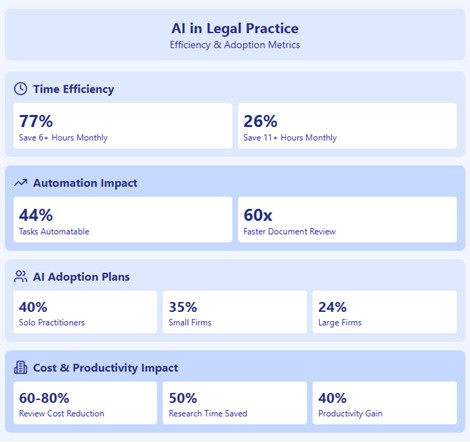
AI’s integration into the legal field extends far beyond automating mundane tasks and repetitive workflows. It’s enabling unprecedented efficiency, reducing costs, and providing precise, data-driven insights. With advancements in machine learning and natural language processing (NLP), AI tools are capable of analysing complex legal material faster and more accurately than humans.
Why the Legal Industry is Adopting AI
Several reasons make AI the ideal partner for legal professionals:
- Time Efficiency: AI tools can comb through mountains of legal documents in minutes, freeing up lawyers to focus on strategic thinking and client advocacy.
- Cost Reduction: By automating repetitive tasks, law firms are reducing operational costs and offering competitive pricing to clients.
- Accuracy and Data Insights: AI minimises the risk of errors in contracts and case reviews while delivering actionable insights based on data patterns.
- Accessibility: Sophisticated AI platforms allow smaller firms to compete with industry giants, levelling the playing field in legal services delivery.
Core Applications of AI in Legal Practice
AI is not a catch-all solution but has proven transformative in several critical areas of law.
1. Legal Research
Gone are the days of spending countless hours poring over case law and statutes. AI-powered legal research tools like LexisNexis and Westlaw Edge enable lawyers to access specific, relevant case precedents and legal insights almost instantaneously. By using advanced algorithms and semantic analysis, these platforms reduce the time and effort required to build strong, evidence-supported arguments.
2. Document Review and Contract Analysis
Tasks such as document review for litigation, due diligence, and contract analysis are notoriously tedious and time-intensive. AI-powered software like Kira Systems and LawGeex excels at identifying key clauses, abnormalities, and areas of risk in contracts and legal documents, with a higher rate of accuracy compared to manual review.
3. Predictive Analytics
An often over-looked application of AI in law is predictive analytics. By analysing historical data, AI can predict the likely outcomes of cases, helping attorneys to craft better strategies. Tools like CaseMine and Premonition assist lawyers in assessing the strengths and weaknesses of their cases long before they reach the courtroom.
4. Automation of Administrative Tasks
Administrative tasks, including billing, scheduling, and time tracking, can be seamlessly handled by AI tools. This automation allows lawyers to focus on their core work, increasing productivity and eliminating errors that arise from manual processes.
5. Chatbots and Client Interaction
AI-powered chatbots are becoming a popular tool for law firms to handle initial client queries, provide updates, and schedule appointments. These chatbots use NLP to generate effective responses, streamlining client communication and improving accessibility to legal services.
Ethical Considerations in AI Adoption
While the prospects of AI in law are exciting, there are significant ethical concerns that law professionals and firms must address:
- Data Privacy: AI systems rely on vast amounts of data, raising questions about how sensitive client information is processed and secured.
- Bias and Fairness: Machine learning models are only as good as the data fed into them. Poorly curated datasets can result in biased outcomes, potentially impacting justice.
- Accountability: If AI makes an incorrect recommendation or decision, who bears responsibility – the tool’s developers, the law firm, or the lawyer using it?
Lawyers must strike a balance between leveraging AI efficiencies and upholding their ethical duty to their clients.
The Future of Legal Practice with AI
As AI becomes more sophisticated, its role in the legal field will only expand, bringing both opportunities and challenges. Here are some trends legal professionals can expect:
1. Increased Collaboration Between Lawyers and AI
AI will not replace lawyers but will act as their trusted assistant. By complementing human intelligence with AI’s analytical capabilities, legal practitioners can achieve unparalleled efficiency. The shift is not about replacing roles but enhancing them.
2. Access to Justice & Democratisation of Legal Services
AI tools are making legal practice accessible to smaller law firms and even self-represented individuals. Automated document drafting, online dispute resolution platforms, and legal research tools can help ensure legal support reaches broader audiences.
3. Growth of AI Regulation in Law
As AI adoption rises, governments and regulatory bodies will likely introduce frameworks to govern its use in legal settings. These regulations will ensure AI maintains fairness, security, and transparency in legal practices.
4. Evolving Roles in the Legal Profession
The roles of legal professionals are changing. Lawyers who understand both the law and technology will become invaluable in advising on AI-related matters such as intellectual property, cybersecurity, and compliance.

How to Stay Ahead as a Law Professional
For legal professionals, embracing AI is no longer an option – it’s a necessity. Here are a few strategies to equip yourself for this transformation:
- Upskill: Take courses or attend workshops that focus on legal technology and AI integration.
- Stay Informed: Keep up with the latest developments in legal tech through industry publications and conferences.
- Collaborate with Tech Experts: Partner with technology specialists and data scientists to create tailored AI solutions for your firm’s needs.
- Adopt an Open Mindset: Embrace innovation and adjust your workflows to incorporate AI-driven efficiencies.
AI Revolutionising Legal Practice: Conclusion
The AI revolution is reshaping the legal profession in ways once thought unimaginable. From simplifying legal research to predicting case outcomes, AI empowers lawyers to work smarter, faster, and more effectively. However, the journey to AI adoption is not without its ethical challenges, requiring lawyers to remain vigilant and proactive.
For law professionals, understanding and leveraging AI is critical to staying relevant in an industry primed for transformation. As the saying goes, “Adapt or be left behind.” With the right approach, AI can unlock countless opportunities that redefine the future of legal practice in Australia and across the world.
Need help choosing the right AI tools? Also checkout my 2024-25 AI Legal Tools Evaluation Checklist
After more details about AI Legal Research Tools in Australia? Checkout my Guide to AI Legal Research Tools for Lawyers in Australia
Need guidance on choosing the right legal AI tools for your firm? Book a consultation with Andrew Easterbrook, a lawyer with 20 years of experience helping Australian law firms streamline their operations through AI and automation. With expertise in both legal practice and AI technology, I can help you make informed decisions about the tools that will work best for your practice. Contact us for more information about our consulting service here